
If you are building a new home or looking to upgrade an outdated system, you might be asking: What is central AC? And why is it considered the gold standard for indoor comfort? In short, central air conditioning is a whole-home cooling solution. Rather than cooling a single room at a time, a central AC system cools your entire house simultaneously by distributing chilled air through a hidden network of ductwork and vents.
Let’s break down exactly how these systems work, what the core components are, and why they are the best choice for beating the Dallas heat.
What is a Central AC Unit? (The Basics)
If you have ever asked, “What is a central AC unit?”The simplest answer is that it is a “split system.” Unlike a window unit or a portable room cooler that houses all its parts in one noisy box, a central AC unit is split into two main halves: an outdoor unit and an indoor unit.
Working together, these two halves regulate your home’s temperature from a single, central thermostat. This ensures every room in your house stays perfectly cool and comfortable.
How Does Central Air Conditioning Actually Work?
Many people assume that an air conditioner “makes” cold air, similar to how a furnace makes heat by burning gas. In reality, central air conditioning works more like a sponge.
The system begins by using a chemical refrigerant to absorb the heat and humidity inside your house. The system pulls the warm indoor air through your return vents, absorbs the heat into the refrigerant, and pumps that trapped heat outside to be released into your yard. Once the heat is removed from the air, the newly chilled air is pushed back through your ductwork and out of your room vents.
It is a constant cycle of absorbing indoor heat and dumping it outside until your home reaches the exact temperature set on your thermostat.
The Core Components of Central Air: Inside vs. Outside
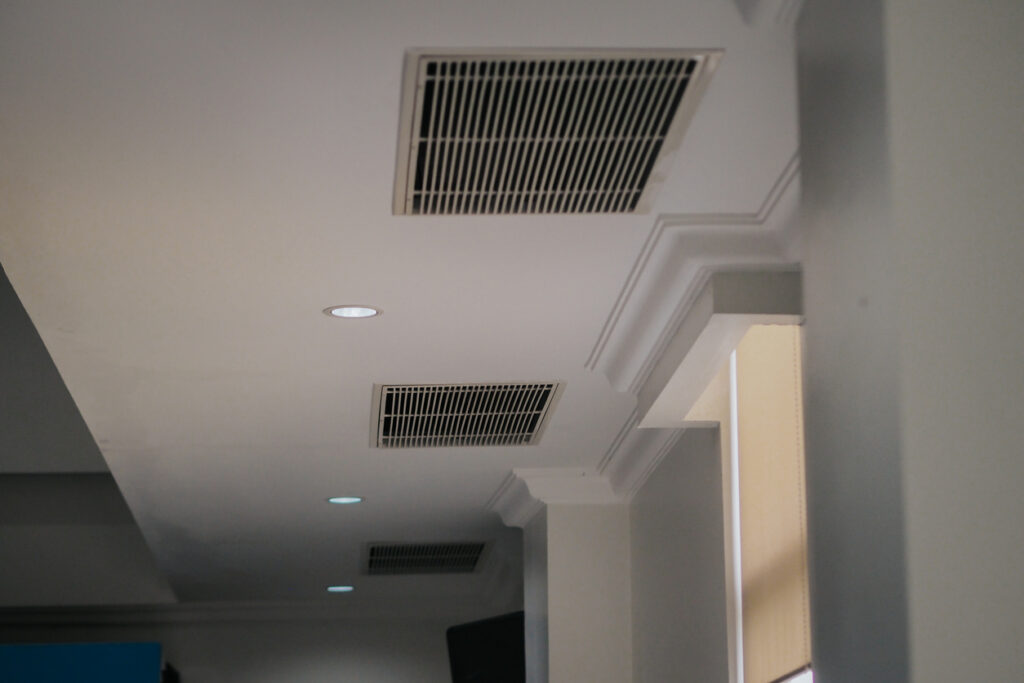
To understand your central AC, it helps to know what you are actually looking at when you walk around your home. Central air systems rely on three main components to function:
- The Outdoor Unit (Condenser & Compressor): This is the large metal box sitting in your backyard or on the side of your house. Its job is to take the hot refrigerant coming from inside the house, pressurize it, and use a massive fan to blow the heat out into the outdoor air.
- The Indoor Unit (Evaporator Coil & Air Handler): Usually located in your attic, garage, or a dedicated utility closet, this is where the cooling magic happens. The evaporator coil absorbs the heat from your indoor air, and the air handler (a powerful blower motor) pushes the chilled air through the house.
- The Ductwork: This is the hidden highway system of insulated tubes running through your walls and ceilings that delivers the conditioned air to every room.
Central AC vs. Window Units & Mini-Splits
Why do HVAC contractors almost always recommend central air for family homes? Essentially, it comes down to consistency, efficiency, and aesthetics. Central AC runs quietly inside the home and provides an even, consistent temperature in every single room. It also pulls your air through heavy-duty filters, drastically improving your indoor air quality by removing Texas pollen, dust, and pet dander.
In contrast, widow units are clunky. They also only cool a few square feet, block your view, create a security risk by leaving a window open, and are incredibly noisy.
If you have a home without ductwork, or a stubborn room over the garage that never stays cool, we recommend a ductless mini-split air conditioner. They offer the powerful, quiet cooling of a central system without the need to install a massive network of ducts!
What to Consider Before Upgrading Your Central AC
If your current system is over 10 years old and you are ready for an upgrade, you shouldn’t just buy the biggest unit available. An oversized AC will cool the house too fast and shut off before it can remove the humidity, leaving your home feeling cold but clammy.
When you work with a trusted HVAC contractor, they will help you calculate the exact BTU size your home needs based on its square footage and layout. They will also help you look at SEER ratings (Seasonal Energy Efficiency Ratio). A higher SEER rating means the unit uses less electricity to cool your home, which can save you a significant amount of money on your monthly Texas energy bills.
Contact Us To Learn More or To Schedule Central AC Services
Understanding your HVAC system is the first step toward a more comfortable, energy-efficient home. If you are ready to upgrade your cooling or need expert repairs for your existing system, the team at 5 Star HVAC Contractors is here to help.
We offer comprehensive central AC services in Dallas, handling everything from rapid emergency repairs to flawless, code-compliant installations. Call 5 Star HVAC Contractors today or schedule your free estimate online to get the reliable central AC your home deserves!


